Reverse Transfer: The Associate Degree You Already Earned
Reverse transfer combines your four-year credits with your old community-college credits to award the associate degree you already finished. Here's how to claim it.
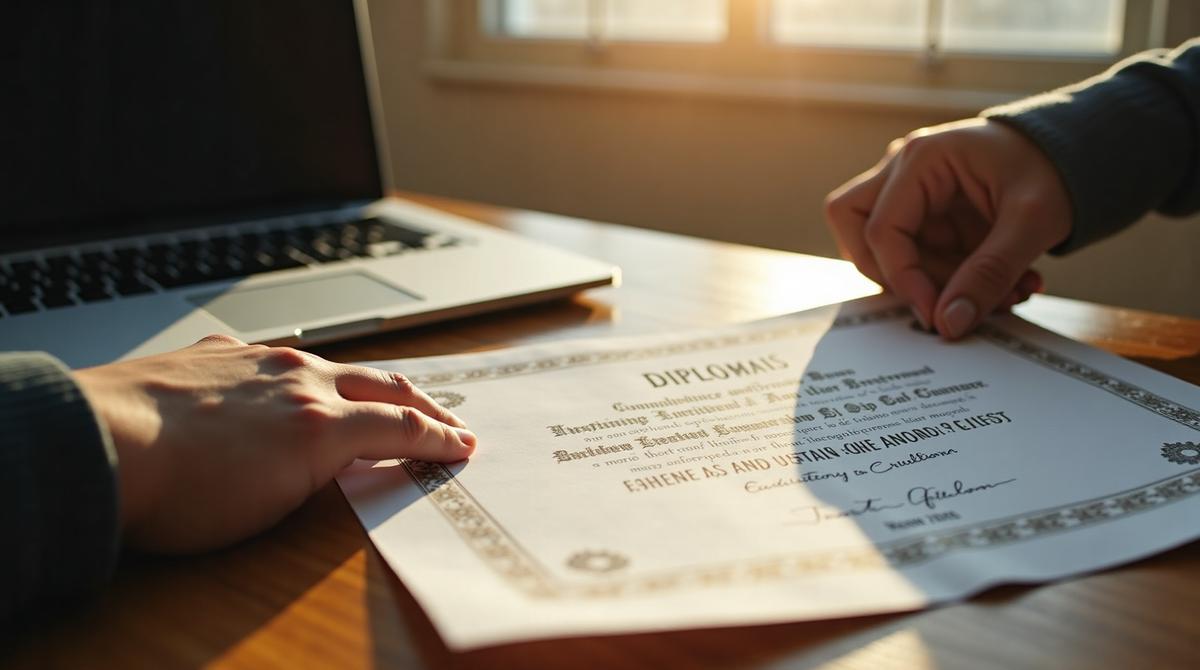
You started at a community college, knocked out a couple of years, then transferred to a four-year school to finish your bachelor's. Somewhere in that move, the associate degree you were three or four classes away from finishing just... evaporated. Nobody handed it to you. You kept climbing toward the bachelor's, and the associate became a thing that almost happened.
Here's what most people in that situation never get told: you probably already finished the associate degree — you just never claimed it. The credits you earned after transferring, sitting on your four-year transcript, often complete the very requirements your old community college needed to award the associate. A process called reverse transfer sends those credits back, lets the community college do the math, and puts the degree in your hand. You earned it. This is how you collect it.
By the end of this article you will know:
- What reverse transfer actually is, and who stands to gain the most from it
- How to request the associate degree you already earned, step by step
- The one thing you can do this week to start the process
See your adult-returner plan
60 seconds — we'll map reverse transfer, PLA, CLEP, and the transfer credits you already have to your degree goal. No card.
No spam. Unsubscribe anytime. We respect your privacy.
What reverse transfer is — and who it's for
Reverse transfer is the process of combining the credits you earned at a four-year school with your earlier community-college credits so that the community college can award you the associate degree you actually completed along the way.
Walk through the timeline and it makes sense. You enrolled at a community college. You took 45 or 50 credits — enough to transfer, not quite enough for the associate. You moved to the four-year school to chase the bachelor's, because that was the goal. Then you kept taking courses. English, a lab science, a math, some electives. Many of those four-year courses satisfy the exact requirements your community college still had open on your associate degree.
Reverse transfer flips the direction of the transcript. Normally credits flow from the two-year school to the four-year school. In reverse transfer, the four-year school sends a copy of your transcript back to the community college, the community college layers those credits onto your old record, checks whether you now meet the associate's requirements — and if you do, it confers the degree. Usually once you've cleared a credit threshold (commonly somewhere around 60 credits, though it varies).
Worth being clear about what this is not: it doesn't cost you any progress toward your bachelor's. You're not trading down or starting over. The bachelor's keeps moving forward exactly as it was. Reverse transfer just picks up a credential you already earned and were leaving on the table. It's additive, not a detour.
So who should care most? Two groups.
If you transferred to a four-year school before finishing your associate, this is for you. You're the core case. You did the work; the paperwork just never closed the loop.
If there's any chance you might stop out before the bachelor's, this matters even more. Life happens — money, family, a job that needs you full-time. A student who leaves a four-year program with no degree walks away as "some college, no credential." A student who claimed their associate first walks away with a degree on their résumé. In the job market, that gap is not small. "Some college, no degree" reads as unfinished. An associate degree in hand is a finished credential that employers can actually evaluate — and it's far more valuable than a transcript full of credits nobody but you can interpret. If you're on the bubble about whether you'll finish, claiming the associate now is insurance you've already paid for.
How to claim the associate degree you already earned
Here's the part that trips people up: reverse transfer almost always requires you to opt in. It does not happen automatically. Many states and college systems have formal reverse-transfer agreements in place — the rails exist — but the train doesn't leave the station until you request it. Nobody is monitoring your transcript looking for a degree to hand you. You have to raise your hand.
Many states and university/community-college systems have built these agreements specifically so the transcript can flow back without you having to re-enroll or pay full freight. Under a typical program, the four-year school sends your transcript to the community college, the community college evaluates it against your old associate requirements, and confers the degree — often for free or a small fee. But the trigger is your request.
Here's the sequence to follow. Process and eligibility vary by state, system, and individual school, so treat this as the shape of it, not a guarantee — your registrar has the authoritative answer for your situation.
Step 1: Find out whether your states/schools have a reverse-transfer agreement. Start with the community college you originally attended. Search "[your state] reverse transfer" or "[community college name] reverse transfer" and look for an official program page. Many state higher-ed systems run a centralized one. If your four-year school and your community college are in the same state system, an agreement very likely already exists.
Step 2: Contact the community college's registrar or transfer office. This is the office that will actually evaluate and award the degree, so they're the ones who matter. Tell them plainly: "I attended here, transferred to [four-year school], and I'd like to request a reverse-transfer evaluation for the associate degree." Ask three things — am I eligible, what's the credit threshold, and is there a fee.
Step 3: Authorize the transcript to be sent back. Reverse transfer requires your four-year transcript to travel to the community college, and that usually needs your written consent (FERPA — the federal student-privacy law — means schools can't move your records without it). Some programs have a one-page opt-in form; some route it through the four-year school's registrar. Sign it. This is the actual mechanical step that makes the whole thing go.
Step 4: Let them evaluate, and watch for residency or "last credits" rules. The community college layers your four-year credits onto your old record and checks the requirements. One common wrinkle: some schools have a residency rule (a minimum number of credits that must have been earned at the community college) or rules about where your final credits came from. If you're short on a technicality, the registrar can tell you exactly what's missing — sometimes it's a single course you could knock out cheaply.
Step 5: Get the degree posted, and confirm it's official. Once awarded, the associate appears on your community-college transcript and you can request a diploma. Confirm in writing that it's been conferred so you can put it on a résumé and a job application without hedging.
The whole thing leans on the registrar at your original community college. They are the single most important contact in this entire process — they evaluate the credits, they apply the rules, and they confer the degree. Everyone else is a supporting actor.
If you're also still working toward (or considering) the bachelor's, it's worth understanding how community-college credits move forward into a four-year degree too — that's the companion play, and we break it down in Community College to 4-Year Transfer — The Stack That Saves $40,000+. Reverse transfer claims the credential behind you; that playbook protects the credits in front of you.
What to do this week
You don't need a plan, a budget, or a free weekend to start. You need one email.
This week, email the registrar or transfer office at the community college you originally attended. Keep it short. Say you attended, you transferred to [four-year school], and you'd like to request a reverse-transfer evaluation to see whether you've earned the associate degree. Ask whether they have a reverse-transfer agreement with your four-year school, what the credit threshold is, and what form they need you to sign to authorize the transcript.
That single email kicks off everything else. If they have a program, they'll send you the opt-in form and tell you the threshold. If they don't have a formal agreement, ask whether they'll still evaluate your record manually — many will. Either way, you'll know within a reply or two whether a degree you already earned is sitting one form away.
I built College Decoded to surface exactly these kinds of credentials — the degree you finished but never claimed, the credits you've already got, the savings hiding in plain sight — so people stop leaving earned things on the table. Reverse transfer is one of the cleanest examples there is. The work is done. The credential is real. It's a request away.
Map your whole adult-returner plan
Reverse transfer, PLA, CLEP, and your existing credits — drafted for your history and degree goal. Free, no card.
No spam. Unsubscribe anytime. We respect your privacy.
The bottom line
Reverse transfer isn't a loophole or a shortcut. It's a recognition that you already finished something and just never picked it up. The associate degree you were a few classes short of at the community college was very likely completed by the courses you took after you transferred — and reverse transfer is the formal mechanism that puts that degree in your hand.
It costs you nothing in progress toward your bachelor's. It's often free or close to it. And it's especially worth doing if there's any chance life pulls you away from the four-year before you finish — because walking away with a real, finished associate degree beats walking away with "some college, no degree" every single time.
The catch is the only thing standing between you and the diploma: you have to ask. The process and the rules vary by state, system, and school, so the authoritative answer always lives with your original community college's registrar. If you take one thing away, make it this — email that registrar this week and request a reverse-transfer evaluation. The degree may already be yours. You just have to claim it.
Want more guides like this?
Get one practical College Decoded guide a week. No spam, no fluff.
No spam. Unsubscribe anytime. We respect your privacy.
Keep reading
- The 2+2 Plan: Community College to University, by StateThe 2+2 plan saves about $40,000 on a bachelor's by going community college to university — here's the destination-first method that makes the credits land, by state.
- What Is an Articulation Agreement? (And Why It Saves $40,000)An articulation agreement is a published deal that guarantees your community college credits count toward a bachelor's. Here's how to use one and save about $40,000.
- Should You Take a Gap Year? The Cost-BenefitA gap year isn't automatically good or bad — it depends on structure, money, and a confirmed plan to return. Here's the honest cost-benefit framework for deciding.